






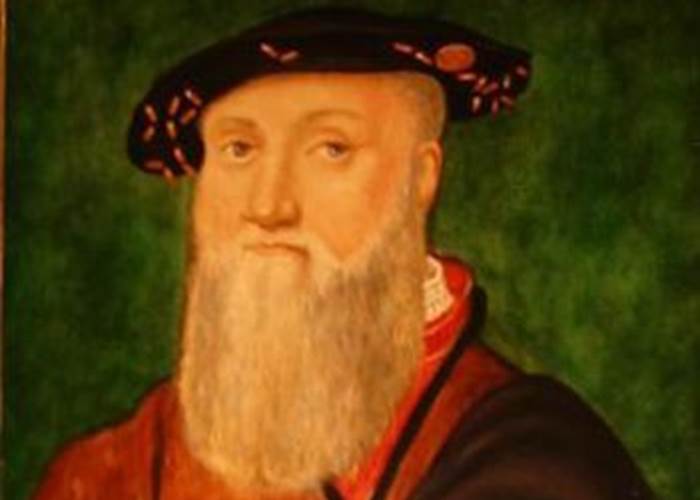
René d’Amoncourt, atelier de Corneille de Lyon. Photo D. R.
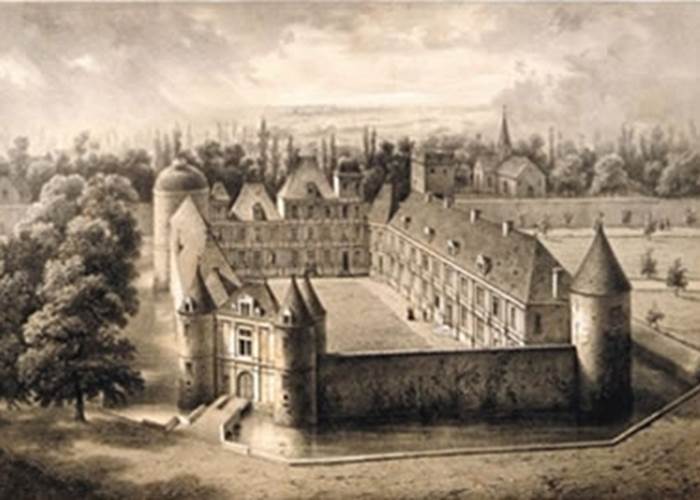
Estampe de Nesle, 1858. Photo D. R
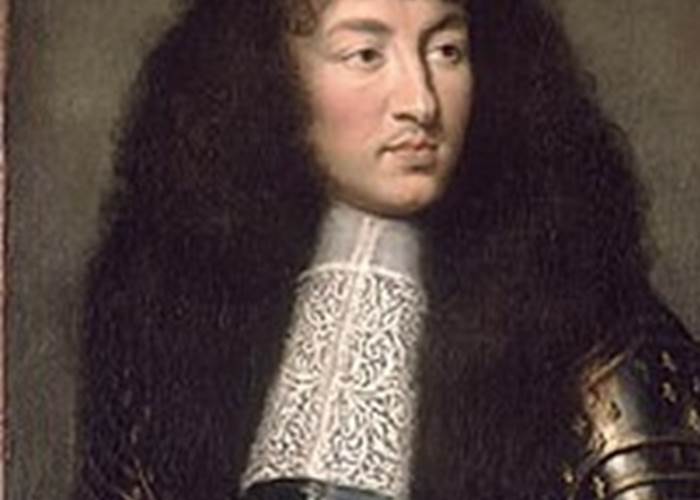
Louis XIV
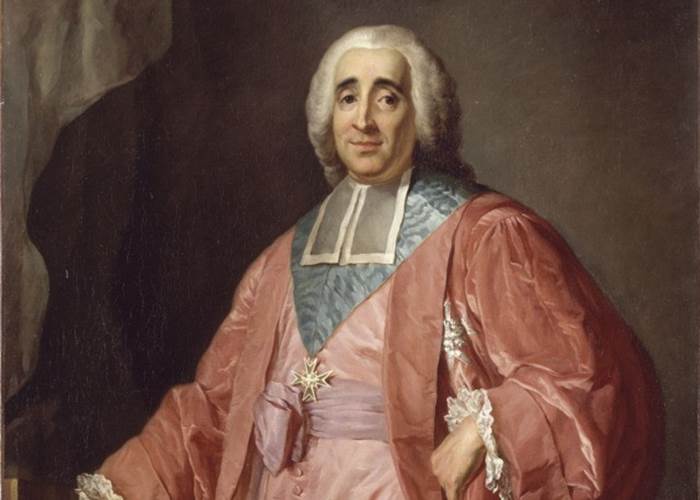
René Nicolas de Maupeou, seigneur de Montigny-sur-Aube. Photo D. R

Philippe Vaillant de Savoisy (1781-1860)
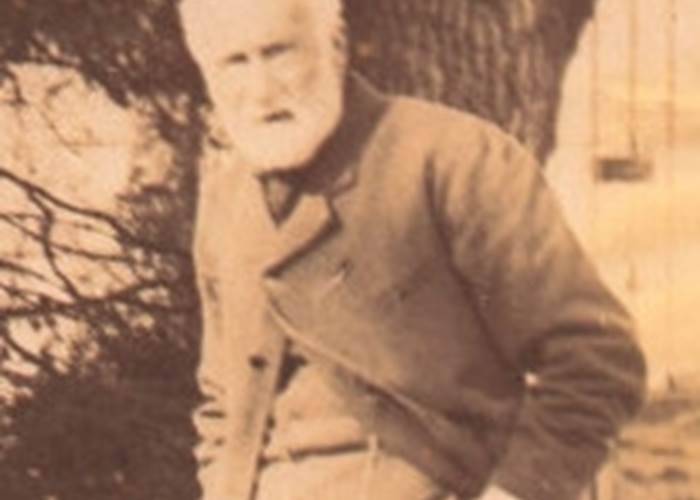
Joseph Gustave Le Bas du Plessis
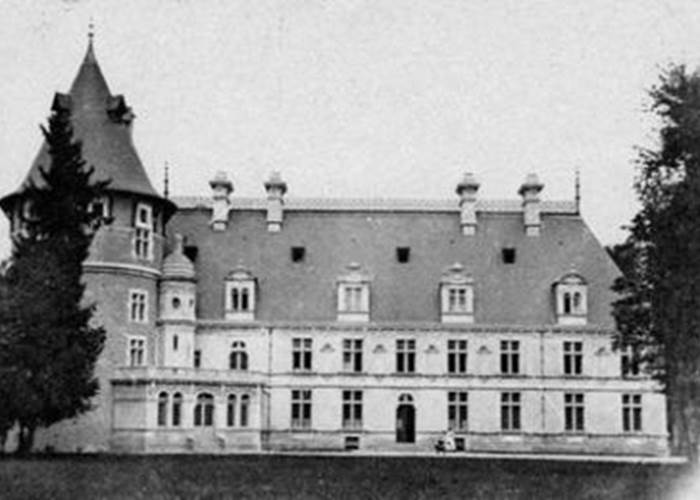
Château après les grands travaux d'André Martin
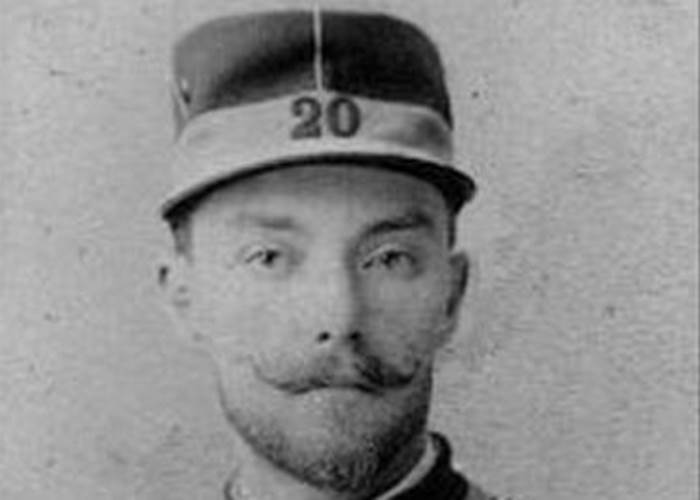
André Martin

Harry Truman et ses soldats en 1918 devant le château
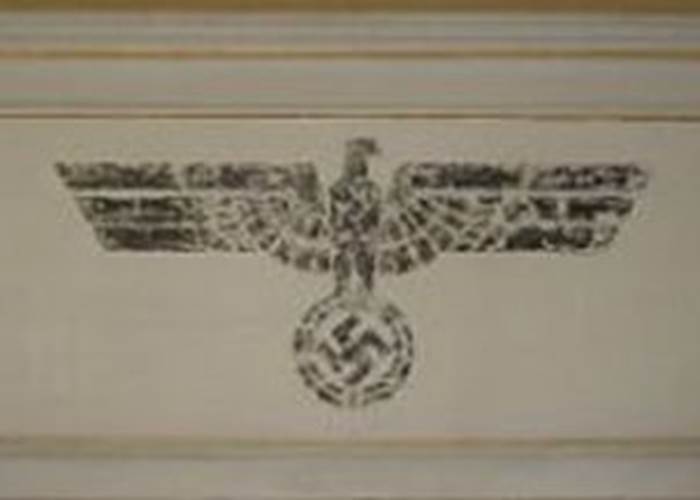
Signe de la croix gammée retrouvé dans le grand salon
The Amoncourt family and the seigneury of Montigny
Let's begin by imagining a fortified castle dating from the 12th century… Two hundred years had passed when the d'Amoncourt family, originally from the canton of Port-sur-Saône in Franche-Comté, emigrated to Champagne, in the diocese of Langres. There, they held three lordships, including that of Montigny-sur-Aube. This was at the beginning of the 14th century. "Nec mors, nec vita" (neither death nor life) was the motto displayed on the d'Amoncourt family coat of arms: gules (red) with a gold saltire (the red color of the shield crossed by a golden St. Andrew's cross). The motto, taken from the Epistle of St. Paul to the Romans, can thus be translated: "Neither death nor life [will be able to separate us from the love of Christ]." The d'Amoncourt family would go on to produce as many secular lords as ecclesiastical ones. According to tradition, these are the younger sons who, at a very young age, enter the orders.
Jean V d'Amoncourt and the Renaissance
After having worked alongside his uncle Claude de Longwy, Cardinal of Givry and Peer of France related to the king, Jean V d'Amoncourt became Archdeacon of Langres and then Bishop of Poitiers. The bishopric then comprised approximately two-thirds of present-day Haute-Marne, half of Côte-d'Or, a good quarter of Aube, a quarter of Yonne, and part of Haute-Saône, totaling 850 parishes spread over 15,000 square kilometers.
We are in the 16th century. Influenced by his uncle and his travels in Italy, Jean V decided to modernize the feudal castle of Montigny-sur-Aube, with the help of his brother René, Master of the Waters and Forests. The architect Jean Bullant, responsible for the châteaux of Petit-Chantilly and Écouen, as well as a wing of the Louvre, was very much in vogue at the time. His influence is visible in the exceptional castle chapel of Montigny, as well as in the north façade of the main courtyard, composed of 44 columns that are still standing today. Imagine the castle as consisting of a vast inner courtyard enclosed by three buildings and a wall, the whole forming a quadrilateral, thus replicating the plan of the original stronghold. An engraving dated 1858, after the demolition of a large part of the property, gives an idea of the site during the reign of John V, in the heart of the Renaissance.
A marquisate under Louis XIV
It was in 1625 that Philiberte d'Amoncourt married Antoine de Barillon de Morangis, a Master of Requests, who was appointed Councillor of State and Director of Finances in 1648. In gratitude for his good and loyal service, Louis XIV raised the seigneury of Montigny-sur-Aube to a marquisate in 1697. A few years later, in 1724, the d'Amoncourt family ceded the Château de Montigny-sur-Aube to René Nicolas de Maupeou, Chancellor of France under Louis XV. Upon his death, he bequeathed the property to his brother, a Lieutenant General in the King's armies, who sold it in 1784 to Bénigne Joseph Vaillant, Count of Savoisy.
A devastating fire at the end of the 18th century
During the Revolution, the château suffered significant damage, including the breaking of sculptures and coats of arms, as well as the destruction of the gatehouse. In 1794, a devastating fire appears to have ravaged three-quarters of the property, forcing Philippe Vaillant de Savoisy, son of Bénigne Joseph, to undertake extensive demolition work in 1817. He documented this in writing. Joseph Gustave Le Bas du Plessis, through his marriage to Philippe de Savoisy's daughter, became the new owner in 1862. Due to financial difficulties, their daughter Anne was forced to sell the estate in 1901, resulting in the loss of the archives.
Major public works projects at the beginning of the 20th century
André Martin, a great Lyon silk merchant and brother-in-law of Édouard Aynard, a member of the Institute and owner of the Fontenay Abbey near Montbard, became the purchaser of Montigny-sur-Aube. From 1902 onwards, he undertook major restoration work under the combined expertise of Édouard Aynard and the Dijon architect Javelle. The château's appearance was transformed, both externally and internally. This is the appearance we still see today. While he opted for the restoration of the north façade and its decoration of superimposed columns, André Martin embarked on a vast transformation of the south façade, facing the garden. Previously austere, it was completely redesigned in a high-quality Neo-Renaissance style.
During the World Wars
In 1918, while enrolled at the artillery school in Montigny-sur-Aube, Harry Truman spent several months at the château. The American officer would become, in 1945, the thirty-third president of the United States.
The Germans, for their part, occupied the estate during the Second World War. They transformed the main hall into a Kommandantur.
In 1961, under the ministry of André Malraux, the exterior of the Château de Montigny-sur-Aube, its park, and its chapel as a whole, were listed as a historical monument. Edmée Pierre Hermitte had owned it since 1956. Upon her death in 1982, Mr. Mirmand bought the estate before selling it in turn, in 2002, to Marie-France Ménage-Small, the current owner.
Classified as a historical monument
In 1961, under the ministry of André Malraux, the exterior of the Château de Montigny-sur-Aube, its park, and its chapel as a whole, were listed as a historical monument. Edmée Pierre Hermitte had owned it since 1956. Upon her death in 1982, Mr. Mirmand bought the estate before selling it in turn, in 2002, to Marie-France Menage-Small, the current owner.